

İçeriğe atla
Hair transplant

Beard Transplant in Turkey

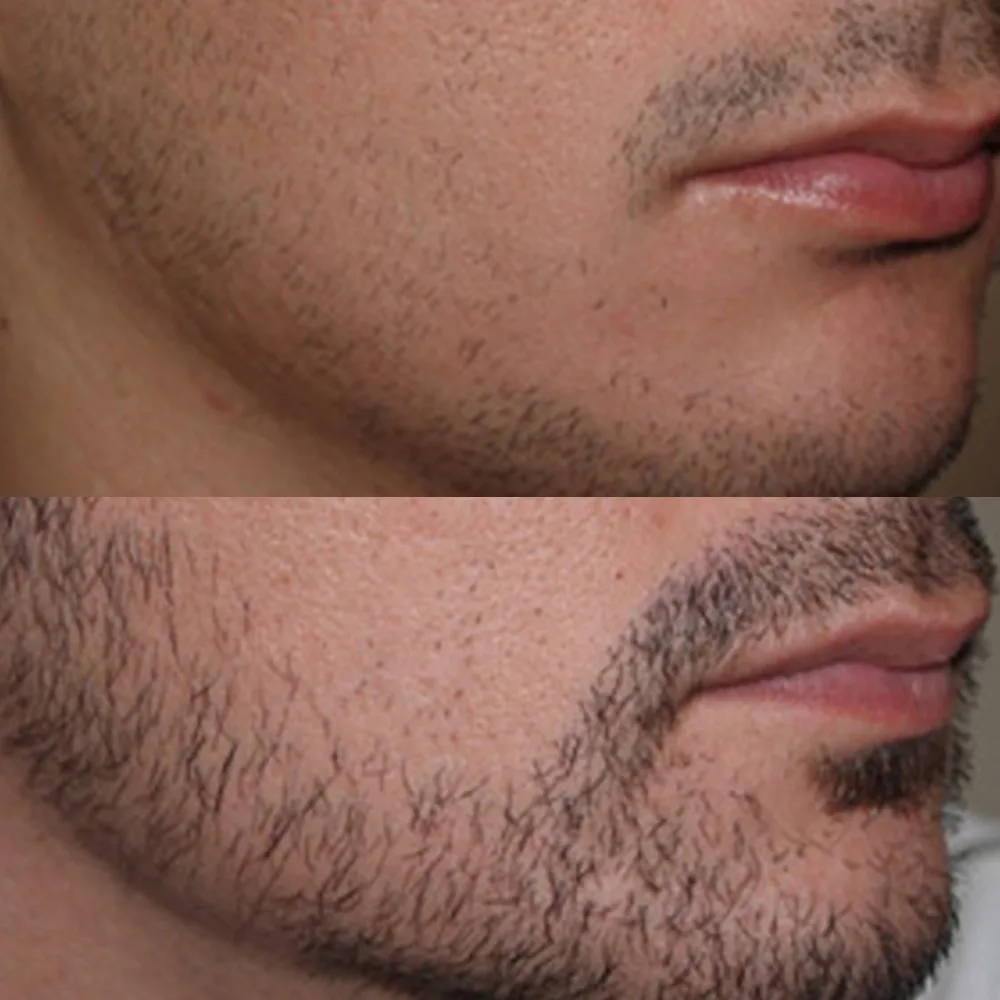
A beard transplant transfers suitable hair follicles, usually from the scalp, to selected beard, moustache, sideburn or goatee areas.

Information only Antalya
Quick answer

A beard transplant transfers suitable hair follicles, usually from the scalp, to selected beard, moustache, sideburn or goatee areas. Planning is based on facial proportions, existing beard direction and the shallow angle at which facial hairs exit the skin. Patchy growth should be medically assessed before transplantation when alopecia areata, scarring or active skin disease is possible.

At a Glance
  • Procedure focusRestoration or redistribution of hair in selected beard, moustache, sideburn or goatee areas.
  • Donor sourceOften suitable scalp follicles harvested individually with FUE; donor characteristics should be matched to the recipient area as closely as practical.
  • Design priorityVery low exit angle, correct direction, irregular natural distribution and facial symmetry are important for a natural appearance.
  • Early recoveryRedness, crusting, swelling, tenderness and temporary numbness can occur in the face and donor area.
  • Growth patternTransplanted hairs may shed before regrowth. Mature appearance develops gradually over several months and may require grooming.

What Is Beard Transplant?

Beard transplantation adapts follicular-unit restoration to facial anatomy. Donor hairs are commonly harvested by FUE and placed into recipient sites in the beard region. Facial work requires close control of angle and direction because beard hairs often lie close to the skin and change direction across the face. Single-hair grafts are useful at borders, while selected multi-hair grafts may be used centrally. Scalp-derived hairs can retain scalp-like growth and may need regular trimming.

What May It Address?

A beard-transplant assessment may be considered for concerns such as:

  • Naturally sparse or uneven beard density
  • Selected gaps within the beard, moustache or sideburns
  • Stable scars where follicular transplantation is considered appropriate
  • Asymmetry in facial-hair distribution
  • Reconstruction after selected previous procedures or injuries
  • Desire for a different beard outline when donor supply and facial anatomy are suitable

Who May Be Considered?

The cause of reduced facial hair should be assessed first. Active alopecia areata, inflammatory skin disease or unstable scarring may require treatment rather than immediate grafting. Candidate assessment also reviews donor density, hair calibre, curl, previous surgery, scar tendency and general health. A conservative design is important because an unnaturally sharp border, incorrect direction or excessive density can be difficult to correct. Existing beard growth should be examined in several facial zones because natural direction changes around the moustache, cheeks, jawline and chin. If the recipient area contains scar tissue, graft growth can be less predictable and expectations should be discussed before surgery.

How Is the Procedure Performed? Step by Step

  1. Facial assessment and beard design

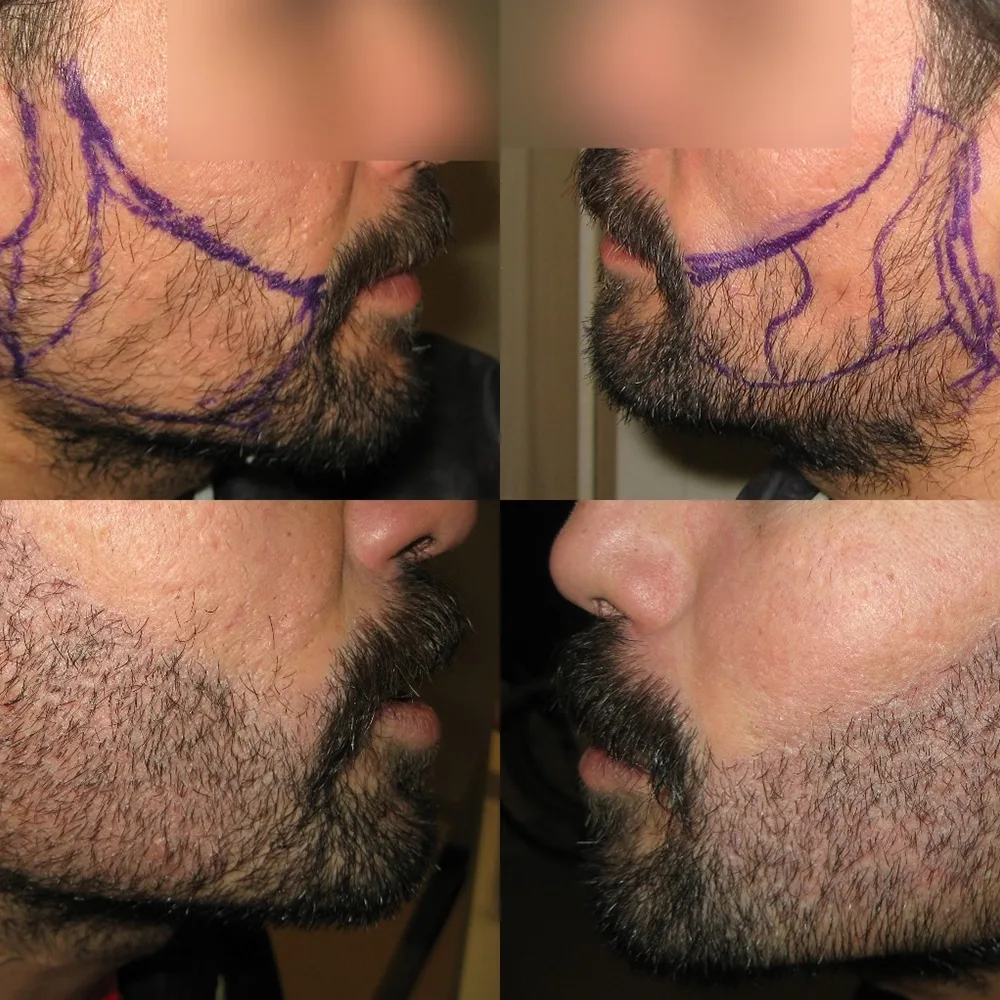
    Existing beard growth, facial proportions and the cause of patchiness are reviewed. The proposed outline and density zones are marked.

  2. Donor selection and local anaesthesia

    A suitable donor region is selected, commonly from the scalp, and local anaesthesia is administered.

  3. Follicular unit extraction

    Individual follicular units are excised, often using FUE. Extraction is distributed to avoid excessive donor thinning.

  4. Graft sorting

    Grafts are inspected. Single-hair follicles may be prioritised for borders, moustache edges and transition zones.

  5. Recipient sites and graft placement

    Shallow recipient sites are created according to natural facial-hair direction. Grafts are placed with attention to angle, depth and distribution.

  6. Aftercare review

    The healthcare team explains cleansing, shaving restrictions, graft protection, sun exposure, medication and follow-up.

Recovery Timeline

The face can show redness and crusting clearly during early healing. Transplanted hairs often shed before regrowth, so the appearance during the first weeks should not be interpreted as the final density.

StageWhat may happen
First 3 daysSmall crusts, redness, facial swelling and tenderness may occur. The grafted beard area should be protected from rubbing, masks or clothing that creates friction when possible.
Days 4–14Crusting clears gradually with the prescribed cleansing routine. Shaving or trimming restrictions depend on the healthcare team’s instructions.
Weeks 2–8Many transplanted hairs may shed. Temporary redness or altered sensation can persist in some individuals.
Months 3–6New growth may begin and can initially look fine or uneven. Grooming requirements increase as scalp-derived hairs lengthen.
Months 6–12+Density and calibre continue to mature. Direction and styling become easier to assess once a larger proportion of transplanted hairs is growing.

Possible Risks and Considerations

Beard transplantation involves donor harvesting and multiple small facial recipient incisions. The aesthetic risk of incorrect angle or an artificial outline is particularly relevant in facial-hair work.

  • Bleeding, infection or medication-related complications
  • Swelling, redness, itching, crusting or temporary numbness
  • Folliculitis, ingrown hairs or small cyst-like lesions
  • Small donor scars from FUE extraction
  • Poor graft growth or uneven beard density
  • Incorrect hair angle, direction or depth leading to an unnatural appearance
  • Visible pitting, bumps or texture change in recipient skin
  • Need for further transplantation, removal or correction in selected cases

Travelling to Turkey for the Procedure

Visitors should allow time for assessment of the cause of beard sparsity as well as the procedure. Return travel should account for visible crusting, swelling and the need to prevent rubbing or pressure on the face. Follow-up should remain available after returning home because persistent redness, pustules, drainage or significant pain require medical assessment.

Travel & Aftercare Checklist

  • Discuss the cause of patchy beard growth before cosmetic transplantation
  • Review the proposed beard outline from several facial angles
  • Ask how single- and multi-hair grafts will be distributed
  • Plan around temporary shaving and grooming restrictions
  • Keep aftercare instructions accessible and arrange follow-up after returning home

Who does what

We coordinate the journey around the procedure. Every medical step stays with the authorised facility and its healthcare professionals.

ScopeOrganisationHealth facility
Appointment coordinationYes—
Transfer and accommodationYes—
Interpreting during appointmentsYes—
Medical assessment, diagnosis and the procedure—Yes
Consent process and medical records—Yes
Aftercare and follow-up—Yes

Frequently Asked Questions

Suitable scalp hair is commonly used, often from the back or sides of the head. Selection depends on hair characteristics and donor density.
Often yes. Scalp-derived follicles can retain their original growth characteristics and may grow longer than native beard hairs.
No. Active alopecia areata, inflammation or unstable scarring may require diagnosis and management before transplantation.
The healthcare professional should confirm travel after assessing facial swelling, healing, medication and graft protection during the journey.
Coordination experience

What Patients Say About the Coordination

These accounts describe the coordination and travel experience only — pickup, communication, interpreting and scheduling. In line with regulation, they do not discuss medical treatment or results.

4.9 Google reviews
Next step

Considering beard transplant?

Request information and a coordinator will forward it, with your consent, to a partner facility — a physician there decides what, if anything, is appropriate.

This form is not for medical emergencies.