Swelling, bruising, watering
Swelling, bruising, watering, mild irritation and light sensitivity can occur. Blurring from ointment is common. Cold compresses, head raised, prescribed drops.

Upper lids, lower lids or both — assessed separately, because the anatomy and the risks are different. From the UK we coordinate your consultation, your appointment at a Ministry-licensed facility in Antalya, transfers, accommodation and interpreting.
Your written quote follows the surgeon’s assessment. No obligation.
These are single cases shared by the treating facility with the written consent of the person photographed. Eyelid anatomy, skin quality and healing differ from one person to the next, so they are not a prediction of your own result.
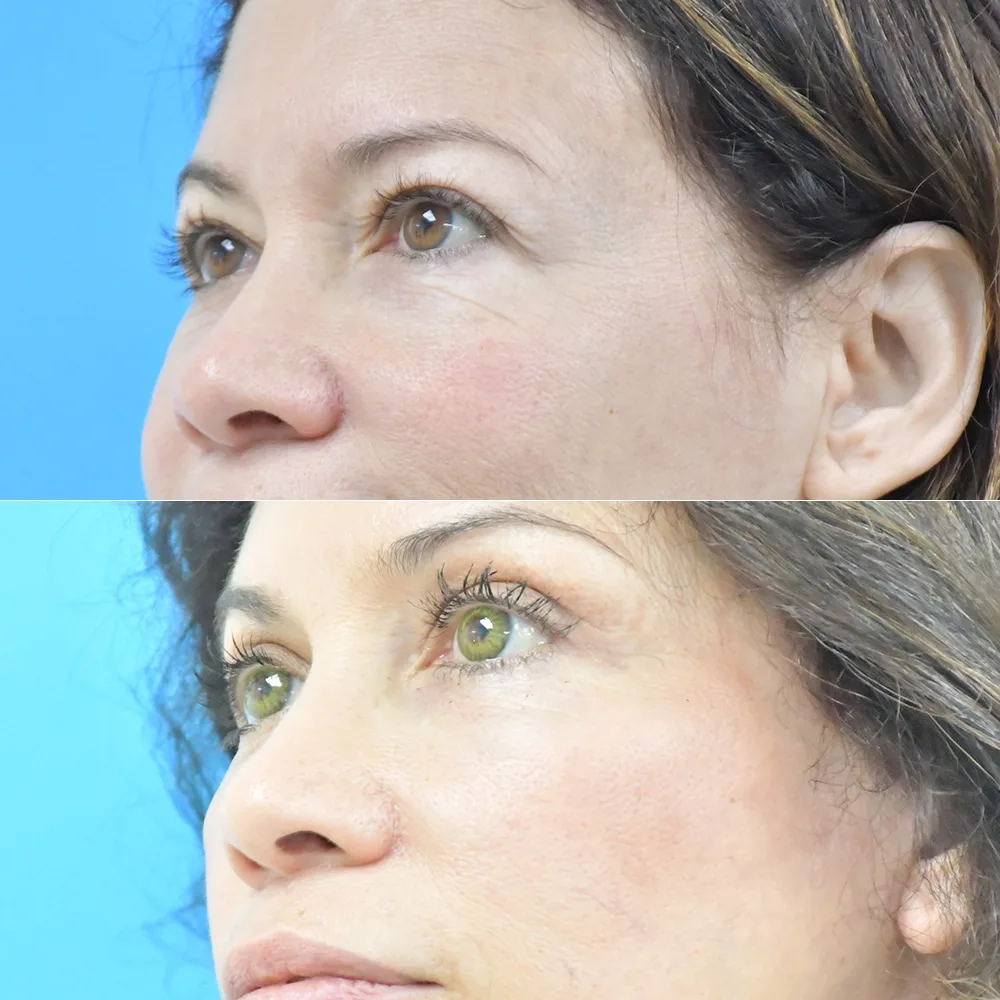
“I’m extremely happy with my results. My eyes look more open and refreshed, but still completely natural. Dr. Hadi Nural understood exactly what I wanted.”
United Kingdom
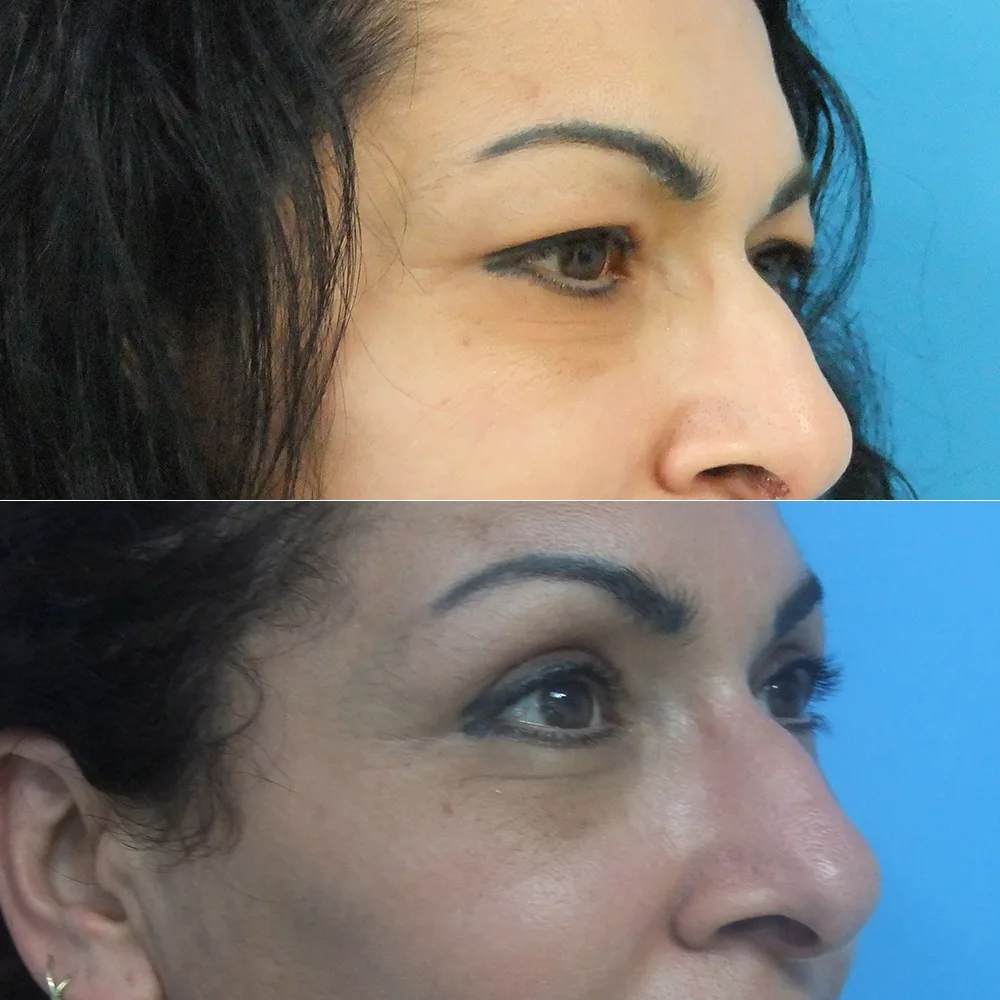
“I had noticeable under-eye bags that made me look tired all the time. After the surgery with Dr. Hadi Nural, my face looks much fresher. I’m very pleased with the outcome.”
United Kingdom
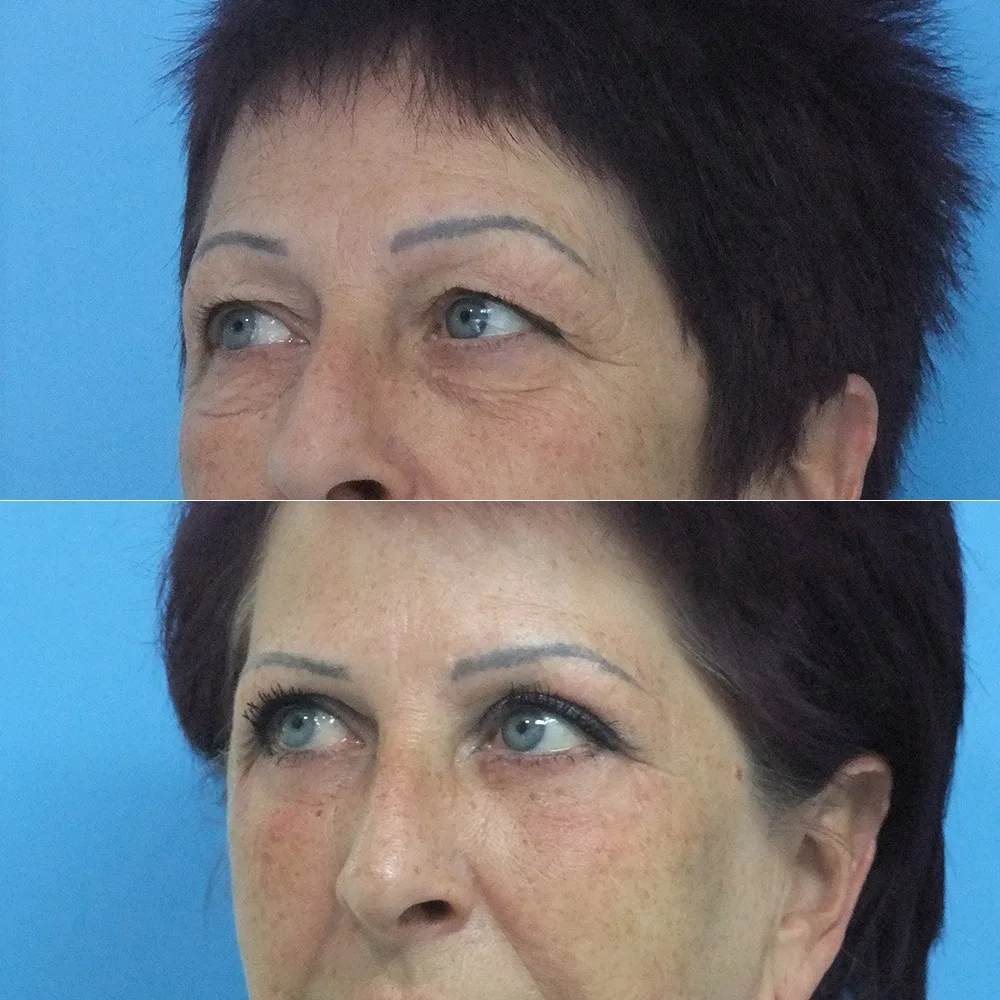
“Great experience from beginning to end. The procedure went smoothly, and the results exceeded my expectations. Thank you, Dr. Hadi Nural!”
United Kingdom
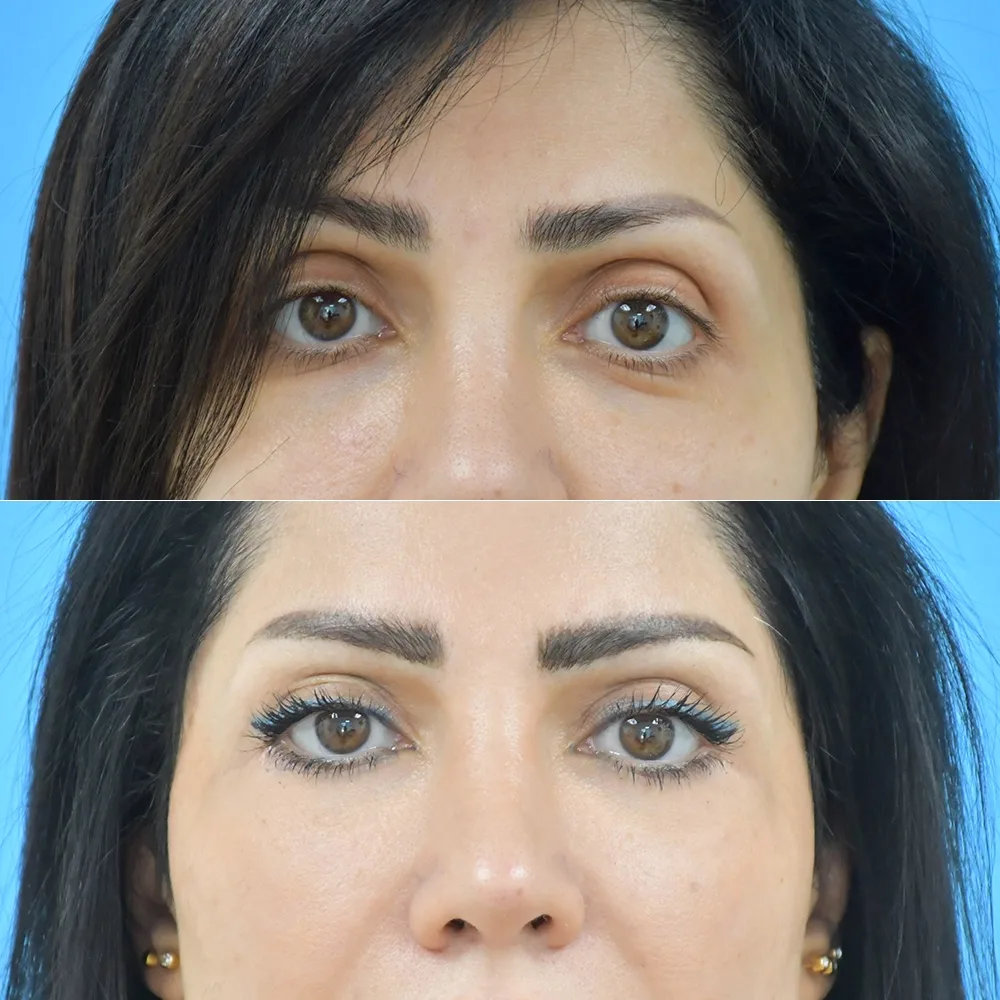
“I was worried about looking unnatural, but that was never the case. My under-eye area looks smoother, and I feel much more confident.”
United Kingdom
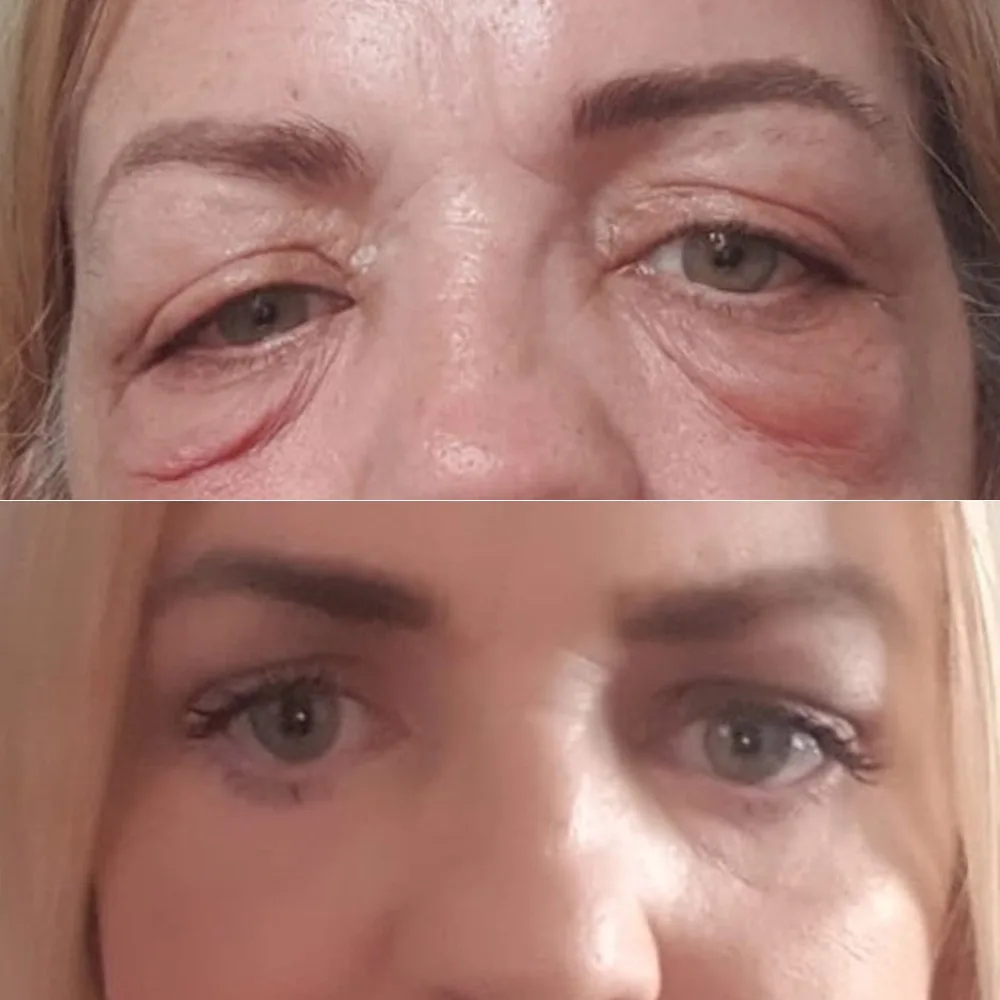
“Dr. Hadi Nural did an amazing job. My eyelids no longer look heavy, and my eyes have a more youthful appearance. The result is subtle and beautiful.”
United Kingdom
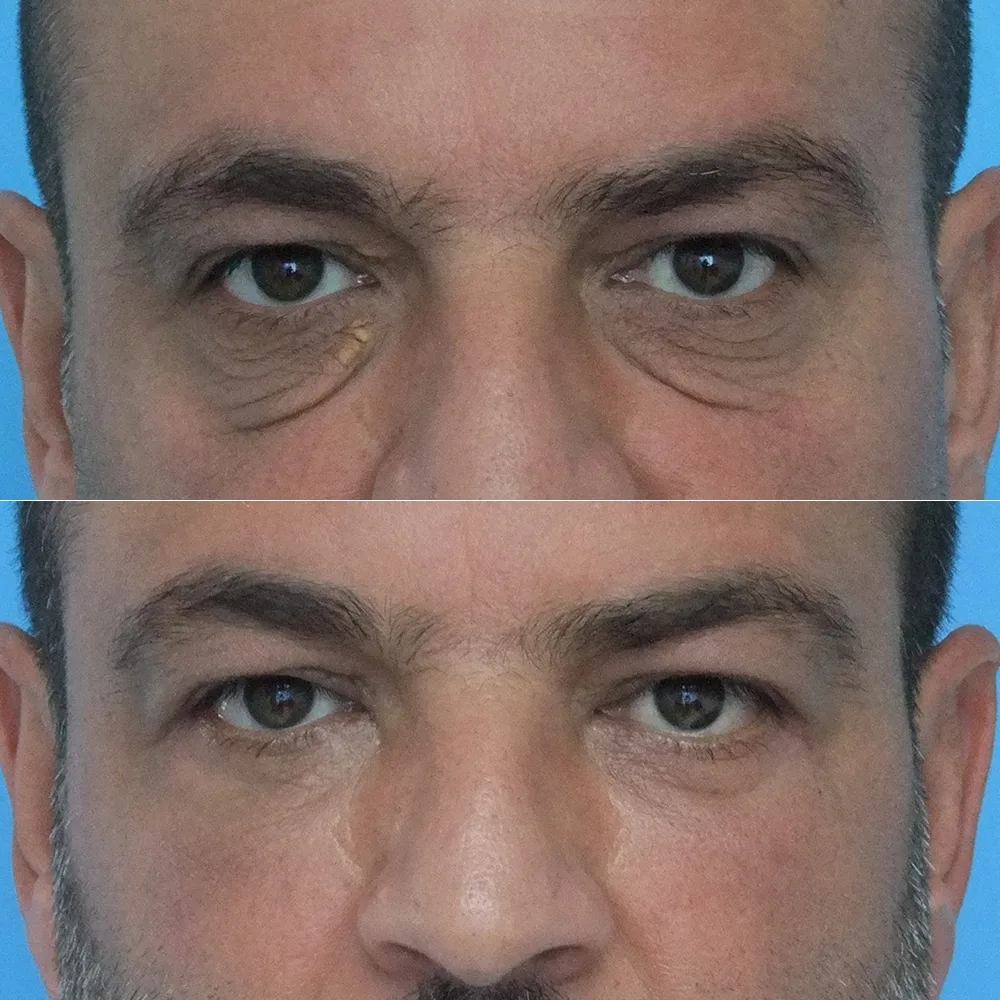
“After years of struggling with puffy under-eyes, I finally decided to have surgery. The difference is wonderful. I look more rested, even without makeup.”
United Kingdom
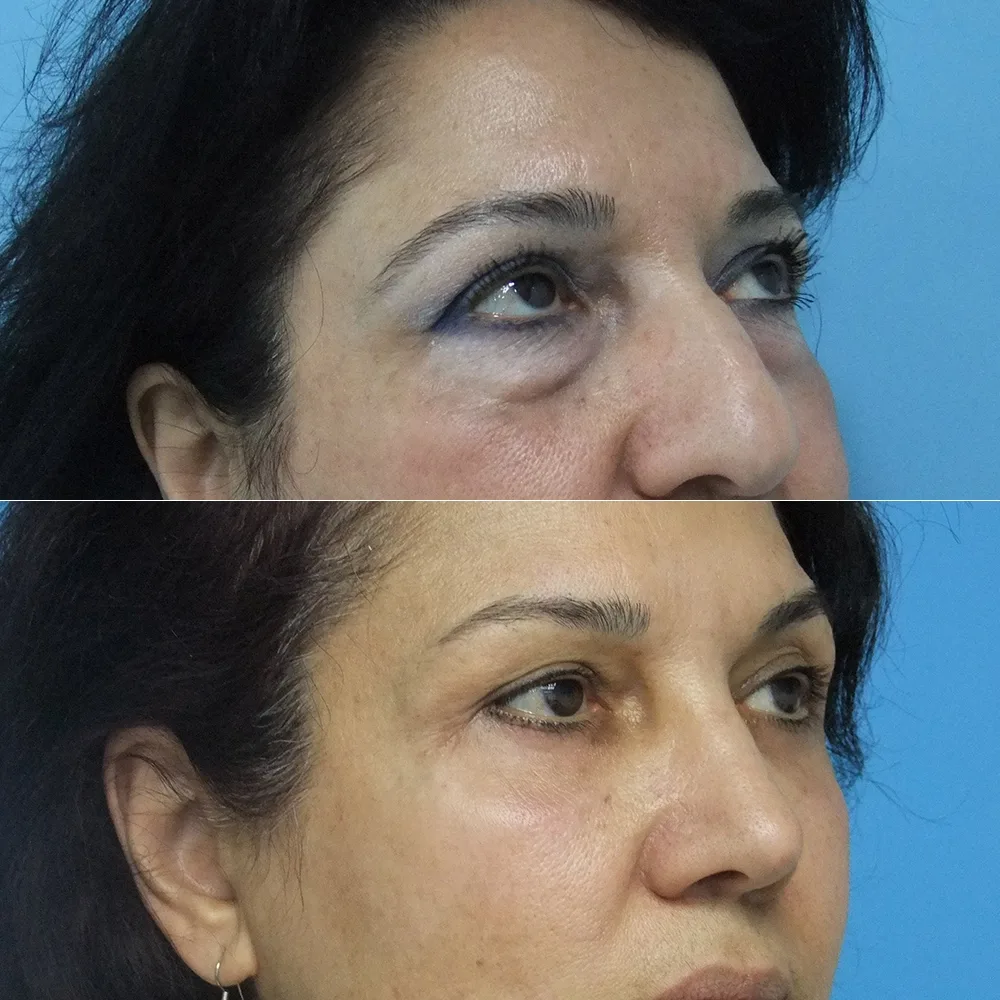
“Professional, attentive, and reassuring throughout the whole process. Dr. Hadi Nural achieved exactly the natural look I was hoping for.”
United Kingdom
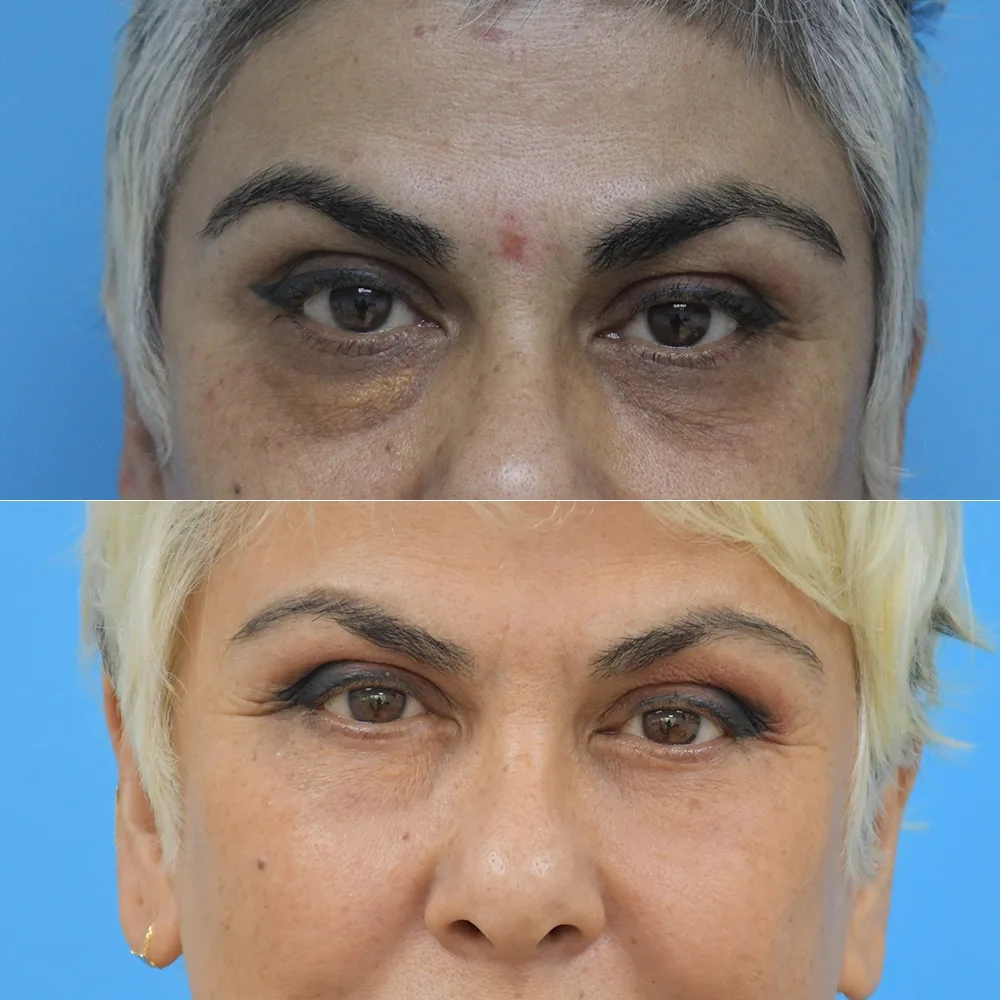
“I couldn’t be happier with my decision. My under-eye bags are much less noticeable, and my overall appearance looks brighter. Highly recommended!”
United Kingdom
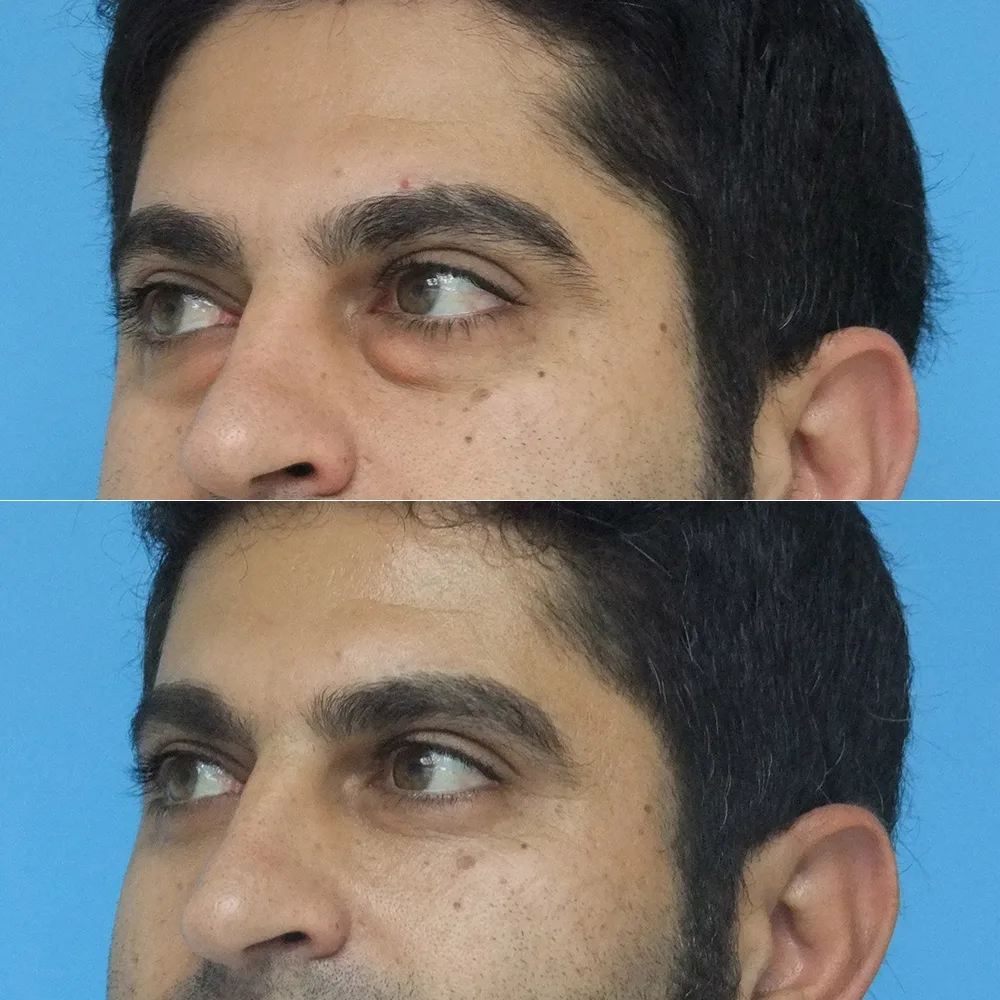
“The heaviness around my eyes always made me look older and tired. Now my eyes look more defined and refreshed. I’m so glad I chose Dr. Hadi Nural.”
United Kingdom
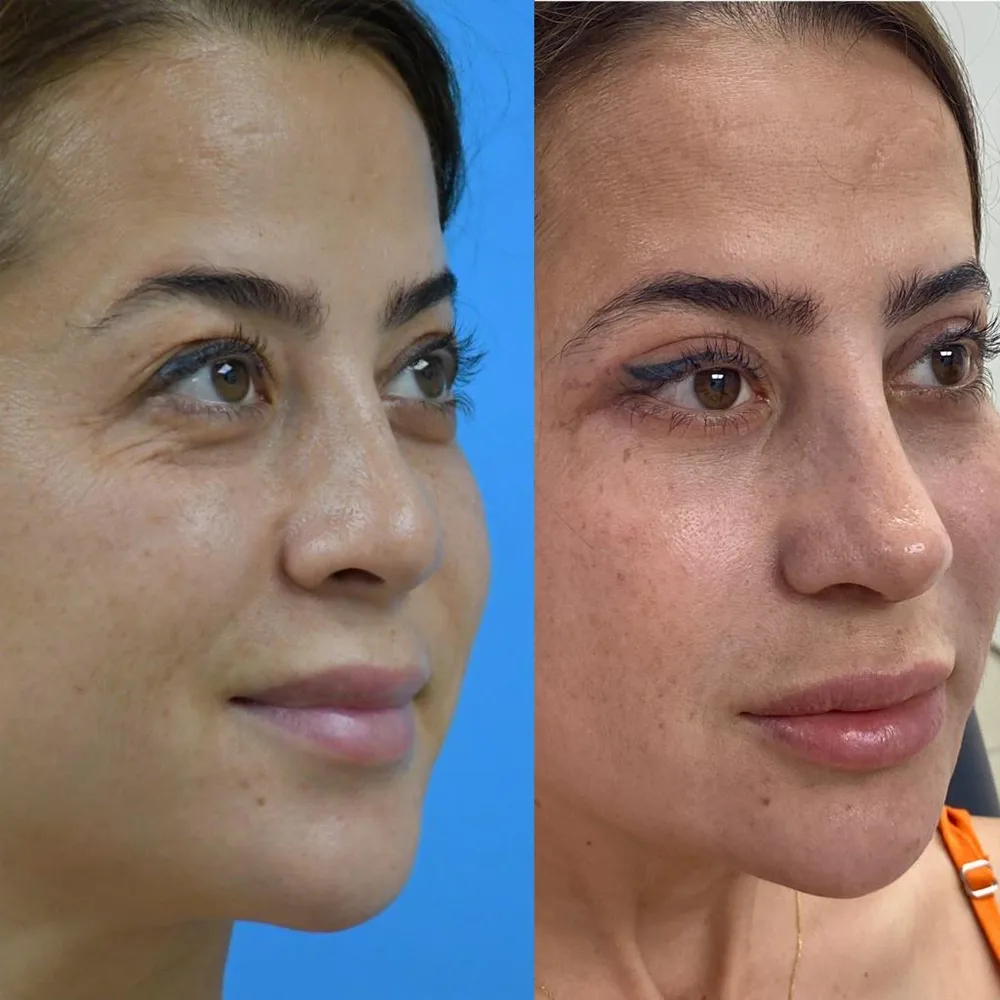
“From the initial consultation to the recovery process, I felt well taken care of. Dr. Hadi Nural explained everything clearly and made me feel comfortable. My results look natural, which was my biggest priority.”
United Kingdom
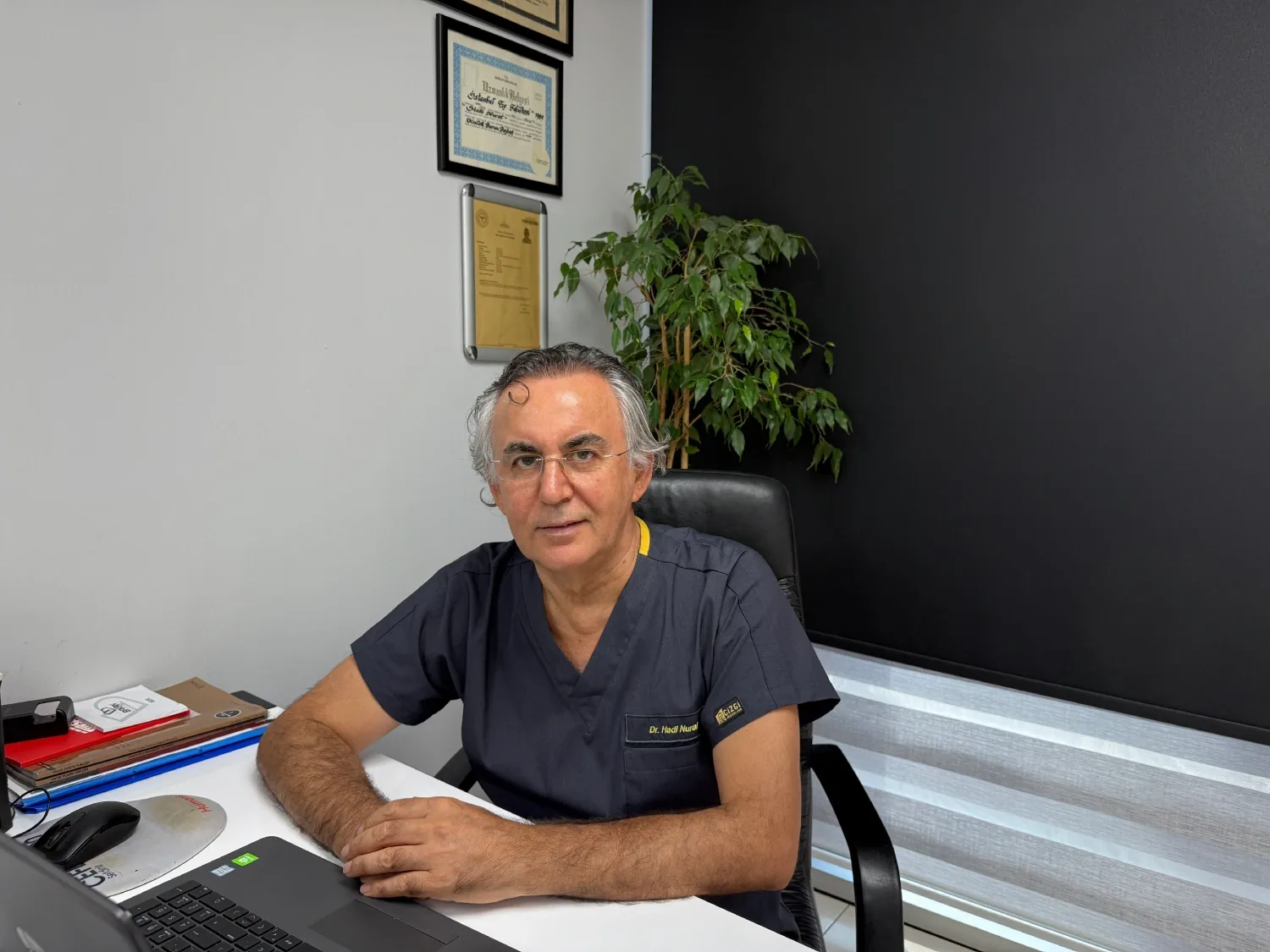
Surgery at the authorised facility is carried out by Op. Dr. Hadi Nural, whose published work covers both the functional and the aesthetic side of nasal surgery — relevant if your concerns include breathing as well as appearance.
He lectures at national and international meetings on surgical and non-surgical facial treatment. His technique for crooked nose treatment — “Aesthetic and functional result of crooked nose treatment; internal microperforating osteotomy and subtotal septal reconstruction” — is published in the European Journal of Plastic Surgery and was presented at the Annual Meeting of the European Facial Plastic Surgery in Amsterdam, 2019.
He also developed a facelift technique, and his academic study on it — “Vertical Space Lift: Transcutaneous Lower Blepharoplasty, Subperiosteal Midface Lift, and Lower Face Lift: A Novel Technique of Buccal Fat Suspension to Medial Infraorbital Rim” — has been published in Aesthetic Surgery Journal.
Treatment, assessment and any decision about suitability are carried out by the physician at the authorised facility. HN Health Turkey coordinates the journey only.
Short clips recorded by guests during or after their stay in Antalya. Each one is that person’s own experience — not a prediction of yours.
We arrange access to licensed health facilities in Antalya. We do not provide healthcare.
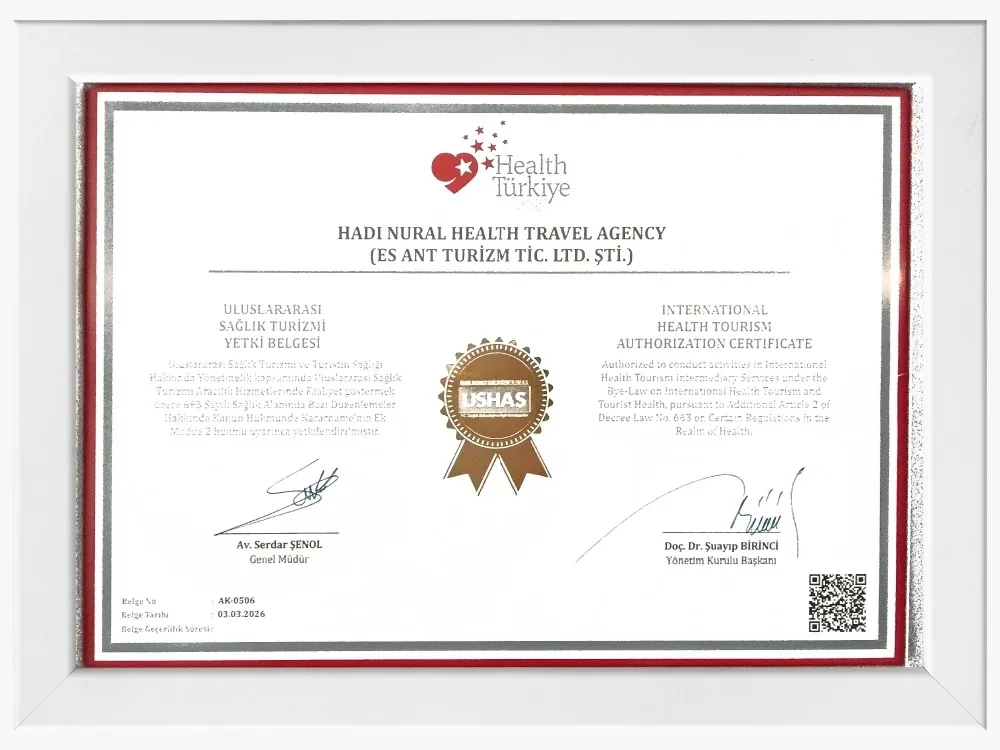
Our international health tourism intermediary authorisation, issued in Turkey. It covers coordination — not the provision of healthcare.
Published by guests on independent platforms. Shown here as excerpts — the full reviews are on each platform.

I travelled to Turkey alone to have upper and lower eyelid surgery. To say I was nervous was an understatement. However, meeting my driver for my stay reassured me, set up on WhatsApp so we could communicate and escorted me into appointments. Thank you Murat. Meeting Nursem for the first time put me at ease and made me welcome from the beginning, excellent communication and reassurance throughout. Thank you too Nursem. Meeting Dr Hadi Nural, he explained everything I needed to know and how the procedure would be performed, instantly at ease with conversation and compassion. The whole process was flawless. Recovery after 2 weeks is remarkable and exactly what I wanted. Thank you Dr Nural, you truly are a master in your field. X
If I had one criticism, I would agree with a lot of reviews over various sites / companies after researching that the paperwork was rushed and there was so much of it.
I would highly recommend Dr Nural and all his staff to achieve what you are looking for.
Once submitting my original request to explore options for surgery. I must say I was not pressurised into committing to pursue with Dr Nural, so credit needs to also be extended to the initial process. I would have steered away if I felt pressured into anything. Thank you all again.

10/10 - Absolutely Exceptional Experience! I cannot recommend Dr. Hadi and his incredible team highly enough. From start to finish, my experience in Antalya was nothing short of outstanding. Traveling completely alone for a medical procedure can feel incredibly daunting, but from the moment I arrived, I was made to feel entirely safe, comfortable, and genuinely cared for. A special, heartfelt thank you goes to Nursen, whose warmth, attentiveness, and support made my stay such a remarkably positive experience. She went above and beyond to ensure I felt completely looked after every single day. The facilities themselves are world-class. Both the clinic and the brand-new hospital were absolutely pristine and exceptionally modern. My private room was huge, providing a comfortable and peaceful environment that was perfect for resting. Additionally, the luxury transport service was top-tier—the vehicles were incredibly comfortable and luxurious, and the drivers were always punctual and professional. If you are considering traveling to Antalya for treatment, you are in the safest possible hands with Dr. Hadi. I would definitely come back in a heartbeat and give them a well-deserved 10/10 recommendation!
The care was exemplary at this clinic. The surgeon was gifted, the coordinator was hugely kind and supportive. The outcome is better than I had ever hoped. I am delighted by the results just 3 weeks later!

A truly positive experience. From start to finish, Hadi Nural Clinic looked after me and the lovely Nursen made sure I wanted for nothing. I definitely made the right choice going with Dr Hadi Nural who is nothing short of genius for his work, he understood perfectly my wishes and made really good suggestions, I am so happy with the result. I had neck, lower and mid deep plane facelift, telescopic eyebrow lift, upper snd lower blepharoplasty fat transfer into my lips and CO2 laser around my mouth. I am currently 9 weeks post Op and the results continue to improve. I am so happy with the result and get nothing but positive feedback from friends and family, my procedure has given me a new lease of life and I couldn’t be happier, thank you so much Dr Hadi 🙏
As a mature English woman I had eye lift surgery by Dr Hadi, the care I received was excellent as everything else , explaining the proseedure,hygiene very polite and made me feel comfortable, his amazing staff the hospital was beautiful as his clinic. I'm really pleased with the results, definitely recommend Dr Hadi to anyone
I had an amazing experience, I had a deep plane mid face lift, upper and lower blephs and a neck lift. I couldn’t recommend Dr Hadi Nural more, a gentleman and great expertise and very professional. The rest of the team are great, all English speaking, kept me well informed throughout the process and they provided great care throughout my journey. I didn’t experience any pain.
The best surgeon in Turkey by far ! 30 years Experience
I recently had a full deep-plane facelift, upper and lower blepharoplasty, and an endoscopic brow lift with DR HADI NURAL
I honestly couldn’t be happier with my experience and results, my aftercare was also exceptional.
From my very first consultation, my surgeon, Dr Hadi Nural, made me feel completely at ease. He listened carefully to what I wanted, he discussed everything clearly, and was realistic about what could be achieved.
I never felt rushed or pressured, and I felt confident that I was in very experienced hands.
Dr Hadi Nural has over 30 years experience of facial surgery I had researched him extensively before traveling from the U.K. to Turkey
The care I received before, during, and after my surgery was excellent, it was Infact exceptional!!!!!!
Having facial surgery is a big decision, and naturally, I had some nerves, but I felt reassured and well looked after throughout the whole process even chauffeured back and forth to my hotel by an immaculate chauffeur, the team really can’t do enough for you.
I went to the doctor for a midface lift and eyelid surgery. From the beginning, I was taken care of down to the smallest detail. Dr. Nural was kind, helpful, and professional from our first meeting, and he and his wonderful team pampered and cared for me throughout. Today, I'm home 10 days after the procedure, and I haven't even had time to write to his extraordinary assistant, Ece, before she's gotten back to me. This is very reassuring because, even though he's far away, he's following me through my recovery. Nural is a reliable, honest, and attentive doctor, but what's more, compared to other doctors, he has something that many don't: a dedicated and knowledgeable team. I couldn't recommend you better!
Upper and lower eyelid surgery
I travelled to Turkey alone to have upper and lower eyelid surgery. To say I was nervous was an understatement. However, meeting my driver for my stay reassured me, set up on WhatsApp so we could communicate and escorted me into appointments. Thank you Murat. Meeting Nursem for the first time put me at ease and made me welcome from the beginning, excellent communication and reassurance throughout. Thank you too Nursem. Meeting Dr Hadi Nural, he explained everything I needed to know and how the procedure would be performed, instantly at ease with conversation and compassion. The whole process was flawless. Recovery after 2 weeks is remarkable and exactly what I wanted. Thank you Dr Nural, you truly are a master in your field. X
If I had one criticism, I would agree with a lot of reviews over various sites / companies after researching that the paperwork was rushed and there was so much of it.
I would highly recommend Dr Nural and all his staff to achieve what you are looking for.
Once submitting my original request to explore options for surgery. I must say I was not pressurised into committing to pursue with Dr Nural, so credit needs to also be extended to the initial process. I would have steered away if I felt pressured into anything. Thank you all again.
I found Dr. Hadi Nural a few years ago as I was researching different ways to deal with my specific tear-trough deformity, and came upon his Vertical Space Lift paper which described a (scarless!) midface lift achieved through the same minor incision of a Transcutaneous Lower Blepharoplasty. The technique described was simply innovative, and far beyond the traditional endoscopic / short-scar / temporal-suspension midface lifts. It was the first time I saw a surgical technique that directly addressed the tear-trough, while also providing eye/cheek/nasolabial/jowl rejuvenation. I spent a lot of time researching every alternative for this, but ultimately, it was obvious the VSL technique was the only true way to deal with the malar bags / festoons / edema that I was developing for many years. Further research showed me the impressive work Dr. Hadi did in general, especially with respect to Male Rhinoplasty. There wasn’t a man’s nose he did that I didn’t like - even the shape of the nostrils were always good - I had never seen such a consistent portfolio of results before. Growing up, I had multiple surgeries just for my breathing, which still was not perfect. As a teenager I also had a rhinoplasty where the doctor still left me with a slightly crooked (but mostly ok) nose. Each doctor I saw specialized in one part of the nose (form or function), but not both. So when I saw Dr. Hadi was also an ENT, I realized he was one of a very few people that could also fully address my breathing and symmetry issues in a comprehensive and holistic way, while providing extremely natural and masculine results. As such, I realized the combination of skills and expertise of Dr. Hadi was truly one-of-a-kind, and so I decided to reach out to his team. After we started talking, we had a video phone interview and once he saw my face with movement he indicated he could easily address my issues (other doctors I had discussions with told me they couldn’t help me in my particular case). That was a relief - because the Vertical Space Lift was the procedure I most wanted and the main reason I wanted to go to him, and would not have gone if I was not a good candidate. Meeting Dr. Hadi in person was also a truly great experience - in many ways, he was like a father-figure, making sure I was making the best decisions and dissuading me from things he felt I did not need. He was very friendly, warm, and had a light-hearted humour which was very comforting. Ultimately, I decided to have the Vertical Space Lift, Revision Rhinoplasty, Submentoplasty, and Fat Transfer. We reviewed the action-plan the morning of, and once everything was settled - he actually personally drove me to and from the hospital himself - which was a very cool and personal experience that I did not expect. In Turkey, you often hear horror stories about how some surgeons delegate the work to others leaving people with horrible results, but Dr. Hadi provided the complete opposite experience with not only doing all the surgeries himself, but also by becoming my personal chauffeur :) Normally, most of the work is done at their clinic, but I had 7-8 hours of surgery so they put me in the hospital to ensure I was looked after overnight. The surgeries themselves went well, although afterwards it was a difficult recovery for the first two days due to the extensive work that was done - but not related to the procedures directly. In my case, after being prone for 7-8 hours a lot of swelling developed in random places throughout my body so it made some movement difficult at first, so it was good that I was in the hospital where they paid extra attention to me. The swelling subsided, so the next challenge was dealing with nervousness about the results, but the week after when I saw the results for the first time, I was extremely relieved and happy. When Dr. Hadi went through such a huge list of issues he fixed with just my nose I couldn’t believe it - you get used to the way you are and that becomes your normal, such that you don’t often realize how much better it could be. In my case, the grass was really greener on the other side - when I breathed in through my fixed nose for the first time, I felt a clarity of breathing I had never experienced before - I couldn’t believe this is what I was missing for most of my life! And of course, two weeks after surgery, my nose is looking really great and natural also - I still look like me, just a better version. Early results of the VSL, Submentoplasty, and fat transfer are looking good too, but still there is a long way to go until the final result. I really appreciate that I had 3 immediate in-office follow-ups after my procedures as well, which further illustrated the high level of care provided. I am so thankful I decided to do all this with him, and for what I needed and wanted - I believe he is the only doctor in the world that could have done this! Overall, the whole experience of coming to a foreign country alone for intensive surgery was really great - and for this I also really need to take a moment to thank Ecem - smart, charming, beautiful, and kind - who took care of me from start to finish.
From my surgery to aftercare I can honestly say I was looked after,very professional my procedure was upper & lower blepharoplasty I’m still healing but I’m so pleased with the results thank you dr haddi & team
The whole experience was flawlessly smooth and easy from start to finish. From planning flights, appointments, surgery and aftercare. Dr Hadi and his team were really professional and supportive as I was travelling on my own from the UK and was quite apprehensive. The whole process was explained clearly and I can’t fault their care. I love the result and it was the best decisions i ever made.
I am only 2 weeks post‑op from septorhinoplasty, lower blepharoplasty and facial fat transfer with Dr Nural and his team, and I wanted to share my experience so far.
From my very first enquiry, everything was clear, professional and kind. All questions were answered fully, pricing transparent, and I felt completely supported throughout every step – from pre‑op checks to aftercare instructions.
The procedure went smoothly, and I was given clear guidance on healing. Right now I am still in the early stages of recovery – swelling and bruising are normal and expected – but I already feel confident that I am in the best hands. The care I have received has been excellent, and I am so glad I chose this clinic. I will update my review once fully healed, but I can already highly recommend them for their honesty, skill and genuine care.
I had an excellent experience with Dr Nural. He was very professional and delivered exactly what I was hoping for. The staff at mediface were all brilliant. So welcoming and friendly. Dr Nural is very experienced and made the whole experience so much more easier.
I have had eyelid surgery, rhinoplasty and a deep plane face and neck lift with Dr Hadi. I’m currently a week out from a minor revision as I’m thick skinned and have a tendency for extreme swelling. I can however, already see great results and the recovery is really easy, thanks to the skill of Dr Hadi, clear instructions and impeccable aftercare. The co-ordinator/translator Tugba, is lovely. Very professional and organised. The nurses are great…everyone is friendly, professional and skilled at their jobs. I was treated with respect, care and empathy the whole time. After discharge, (overnight stay for facelift), you’re taken back to your hotel and are consistently checked on, returning almost daily to the hospital. The driver is great, helping to pick up supplies etc and again, very respectful and friendly. Dr Hadi is very skilled. I have very realistic expectations and certainly don’t expect to look 30 again but I love my new non lumpy nose, my lifted face and eyes and fresher appearance. Thank you to the team
An amazing doctor / surgeon! Have been going to dr hadi nural for many years and always been so happy with my results. Very welcoming & reinsuring. Thank you for making me feel at ease and being an amazing surgeon 🥰❤️
I recently had an amazing experience with Dr. Hadi Nural at Mediface in Antalya. I traveled all the way from Los Angeles, California, for a rhinoplasty and eyelid surgery, inspired by a glowing recommendation from one of his former patients. The entire journey was spectacular from start to finish. Dr. Hadi Nural was incredibly informative, providing a detailed render of what my face would look like post-surgery and thoroughly explaining the process and aftercare. He listened attentively to my needs and preferences, ensuring every detail was just right. His attentiveness and dedication were evident throughout the entire experience, from the initial consultation to the final check-up. The clinic itself was spotless, equipped with the latest technology, and conveniently located. The staff at HN Health were absolute professionals, making me feel comfortable and well-cared for. Thanks to their expertise, my healing process was smooth, and I was back to my normal life with minimal bruising in just three days. The results exceeded my expectations, boosting my confidence tremendously. Dr. Hadi's experience and skill truly make him an artist in his field. I highly recommend him to anyone considering cosmetic surgery. My name is Selen Kelly! Feel free to reach out to me if you have any questions or want to hear more about my experience!
I recently had the pleasure of being treated by Dr . H adi , and I cannot express how grateful I am for the exceptional care I received . From the moment I arrived , I felt welcomed and at ease , thanks to the warm and professional demeanor of Dr . H adi and the entire nursing staff . Dr . H adi 's expertise and attent iveness truly stand out . He took the time to listen to my concerns , clearly explaining the treatment options available and making sure I felt involved in my care decisions . His thorough ness and dedication to his patients are apparent , and I felt confident in the course of action we agreed upon . The nurses were nothing short of brilliant . They were not only knowledgeable and skilled but also incredibly compassionate . They made sure to check in on me frequently , addressing any questions or concerns I had with patience and understanding . Their teamwork and support made my experience much more pleasant . Additionally , my representative was a true ally throughout the process . They provided assistance with scheduling and insurance questions , ensuring everything went smoothly . Overall , I cannot recommend Dr . H adi and his amazing team of nurses highly enough . Their commitment to patient care and well -being is commend able , and I genuinely felt supported every step of the way . If you are seeking a healthcare provider who truly cares , look no further than Dr . H adi and his outstanding team !
From the moment you land in Antalya to the day you fly home, the practical side is coordinated for you — so you can focus on your visit, not the logistics.
From the moment your flight lands, the logistics are handled — so you can focus on your visit, not the journey.
We help you book a hotel near the facility, matched to your dates and preferences, so your time in Antalya stays calm and convenient.
One named coordinator greets you on arrival and stays reachable throughout your stay — so there is always someone to turn to.
Appointments, transfers and timings are scheduled with the facility and shared with you in writing before you travel.
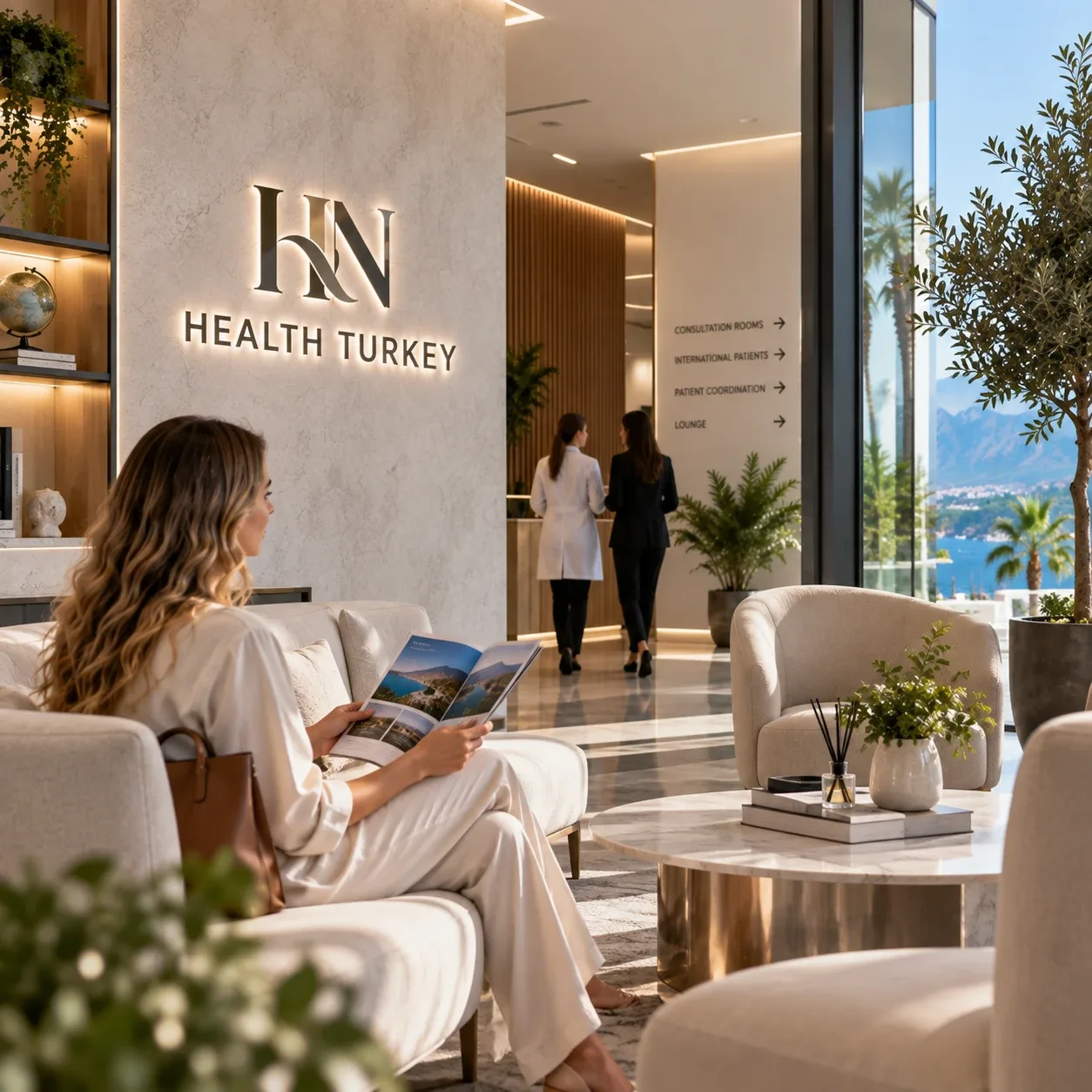
A comfortable lounge in our Antalya office gives you a quiet place to relax and wait between appointments.
Coordination and logistics services are organised by HN Health Turkey. Examination, diagnosis, treatment and any medical follow-up are the responsibility of the authorised facility and its physicians.
Bruising around the eyes is the visible part and fades over one to two weeks; incision lines keep softening for months. General guidance only — your own timings come from the treating professional.
Recovery differs from person to person. When you may fly, work or exercise is decided by the professional treating you.
Op. Dr. Hadi Nural carries out blepharoplasty at an authorised facility in Antalya, with transfers, accommodation and interpreting coordinated around the clinical plan. The figures below are general guidance — upper lids, lower lids and combined cases differ, and your own timings are set by the surgeon after examining you.
Operation time
Persistence of results
Hospitalisation
Sensitivity period
Return to work
Anaesthesia
These are typical figures, not promises. Operating time, length of stay, recovery and anaesthesia are decided for each individual case by the responsible healthcare professional. Upper and lower eyelids are assessed separately, and a combined or revision case often differs from a single straightforward one.
Not everyone who enquires is considered a suitable candidate, and being told no is a legitimate outcome of an assessment. Because the eyelids protect the eyes, the functional side of the assessment matters as much as the cosmetic one.
An assessment typically looks at your general health and medication, dry-eye symptoms, eyelid closure, lower-lid tone, brow position, and any history of glaucoma, thyroid eye disease, laser eye treatment or previous eyelid surgery. Not every problem around the eye is caused by excess skin or fat — brow position, cheek support and eye-surface health all change the picture, which is why upper and lower lids are assessed separately. Uncontrolled eye-surface disease may need specialist evaluation before elective surgery is considered at all.
This is a general list, not your personal risk profile. The risks relevant to your case depend on your anatomy and medical history and must be explained to you by the surgeon before you consent.
Four stages, and a decision point at each one. Nothing moves forward until you say so.
We do not publish a price on this page, because a figure quoted before anyone has examined you tells you very little. What a plan involves — and therefore what it costs — follows from the assessment. Once the facility has reviewed your case, you receive the plan in writing before you commit to anything.
Two people asking about the same operation can end up with very different plans. The main variables are whether upper lids, lower lids or both are involved, whether it is a first procedure or a revision, which examinations the facility requires beforehand, how long you need to stay in Antalya, and what follow-up is needed before you travel home.
Accommodation, transfers, interpreting and the length of stay are then built around the clinical plan — not the other way round.
If something on that list is missing or unclear, ask before you book flights. A plan you cannot read in full is not a plan.
Services described elsewhere on this page are not automatically part of every plan. What applies to you is set out in your own written plan.
The part UK visitors most often underestimate is what happens after the flight home.
HN Health Turkey coordinates communication and logistics. We do not provide medical treatment, and we do not provide clinical follow-up in the UK.
A call costs you nothing and commits you to nothing. If you are not a suitable candidate, we would rather tell you now than after you have booked a flight.
This form is not for medical emergencies.
Most eyelid surgery plans involve a stay of several days so the facility can carry out the consultation, the procedure and at least one review before you fly. The exact length is set by the responsible healthcare professional for your case — we build the travel around their answer, not the other way round.
There is no fixed rule for everyone. Flying is confirmed by the treating professional after assessing swelling, bruising, eye-surface symptoms and medication. We do not put a number on it in advance, because it differs from person to person.
You leave with written aftercare, the warning signs that need medical attention and a named contact. If something urgent develops, you should seek local medical care first and tell us — we then coordinate with the facility. We also recommend arranging a local follow-up before you travel.
No. What a plan involves depends on the assessment, so a number quoted before anyone has examined you would be meaningless. After the facility reviews your case you receive the plan in writing, including what is arranged and what is not, with no obligation to proceed.
Qualified healthcare professionals at a healthcare institution licensed by the Turkish Ministry of Health. Before you commit, ask which facility your procedure is booked at, confirm it is licensed, and ask whether you will meet the surgeon before the day. HN Health Turkey is an intermediary organisation: we coordinate the journey. Assessment, diagnosis, treatment planning and the procedure itself are carried out by the facility and its physicians.
No. Dry-eye symptoms, eyelid closure, lower-lid tone, brow position, previous eye or eyelid surgery, thyroid eye disease, general health and expectations all affect whether surgery is appropriate. Some people are told it is not. That assessment belongs to the healthcare professional, and it happens before anything is booked.
No. The anatomy, the incision options and the goals are different, so upper and lower eyelids are assessed separately. Upper-lid access is commonly through an incision placed within the natural upper-eyelid crease. Lower-lid access may be just below the lash line or through the inner surface of the eyelid, depending on whether skin needs to be removed.
Bruising usually improves over the first one to two weeks, although the pace of recovery varies between individuals. External sutures may be removed at a follow-up when appropriate, and incision lines continue to soften for months afterwards. Your own instructions — including when you may fly, wear make-up, use contact lenses or return to exercise — come from the treating healthcare professional.
After you enquire, your information goes to the healthcare professional at the authorised facility for review. If they consider the procedure appropriate, you receive a written plan covering the expected length of stay, the appointments involved, what is included and what is not. Nothing is booked until you confirm, and some enquiries are declined at the review stage.
Confirm who will perform the procedure and where, make sure your written plan is complete, and check what your travel insurance does and does not cover for planned surgery abroad. It is also worth knowing in advance who you would see locally in the UK if you needed medical attention after returning.
Your coordinator remains your point of contact and passes clinical questions to the facility. You should leave Antalya with written aftercare in English and a record of what was done. If you develop symptoms that concern you, seek medical attention locally in the UK first and then tell us, so we can coordinate with the facility.
Not all dark circles are caused by eyelid skin or fat. Pigmentation, how visible the underlying vessels are, tear-trough anatomy and simple shadowing can each produce the same appearance and need different assessment. Brow position and cheek support also change how the area looks. Whether blepharoplasty would address your particular case is a question for the medical assessment, and the honest answer is sometimes no.
Hi there! 👋
Questions about your treatment plan? Message us — a coordinator replies in English.
Chat on WhatsApp